Gaming Mice
Know the best gaming mice on the market. We source our recommendations from highest rated products online.
What We're Reviewing
In this roundup, we're examining the best gaming mice across different sizes, shapes, and price points. The Logitech G Pro X Superlight 2 leads as one of the most popular choices among esports professionals, offering a proven symmetrical design with exceptional battery life. Razer's Viper V3 Pro brings true competitive pedigree with its lightweight 54g build and refined shape that has been dominating recent tournaments. For ergonomic enthusiasts, the Logitech G Pro X Superlight 2 DEX offers premium asymmetrical comfort with all the quality of its symmetrical sibling. The Endgame Gear OP1w 4k v2 delivers exceptional build quality in a compact form factor favored by aim enthusiasts. Budget-conscious buyers will appreciate the Razer Deathadder V3 Hyperspeed, a smaller ergonomic mouse with great value and near-perfect reviews. Each mouse has been evaluated for sensor performance, build quality, shape, and overall value to help you find your ideal match.
| Product | Notable Features | Pros & Cons | Rating |
|---|---|---|---|
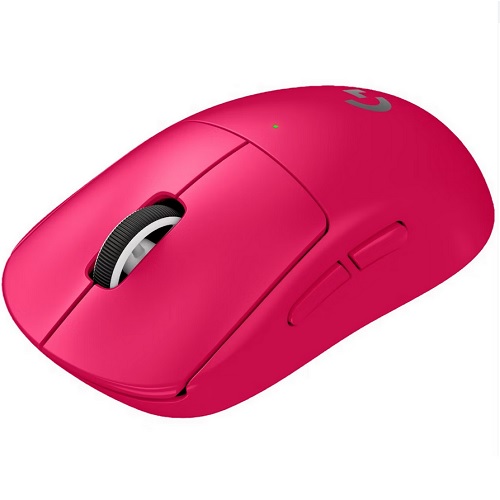 | Medium Size / Symmetrical Shape / Wireless / Lightweight | Pros
Cons
| 4.5 |
DETAILED REVIEW // Brand: Logitech / Model: 910-006799 / Release Date: 9/5/2023 / Price: $159.99 Update: The Logitech G Pro X2 Superstrike just released, for those wanting an even faster mouse with a steep price tag. | |||
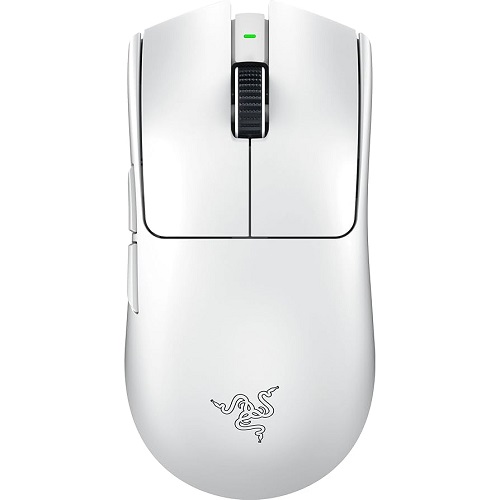 | Medium Size / Symmetrical Shape / Wireless / Lightweight | Pros
Cons
| 4.5 |
DETAILED REVIEW // Brand: Razer / Model: RZ01-05120100 / Release Date: 4/23/2024 / Price: $159.99 Razer's Viper series has true pedigree, with its first edition being released in 2004, beginning its legacy well before its Logitech counterpart took its first steps. The Viper is another industry leader with a premium price point, but this time there is also a more affordable variant, the Viper Hyperspeed, which is somewhat heavier. This review will focus on the Viper V3 Pro. The Viper V3 Pro is a wireless mouse with great battery life (cable for charging and playing at the same time), it's lightweight, medium sized, symmetrical, has great build quality, and is the main competitor to Logitech's GPX 2. There are some similarities between these two contenders, but the key difference between them is the subtle weight variance, the shape of the back of the mouse, and that the Viper has grooved mouse buttons. The Viper V3 Pro is versatile, coming in at just 54g, 6g lighter than the GPX 2, and the back hump of the mouse is slightly less pronounced, allowing for a little more play between the fingertips and the palm. Sporting a reasonably low button height (same as the GPX2), the Viper allows for proper finger curvature in claw grip, enhancing control and precision. Medium sized and slightly smaller palms should find the Razer offering's size and shape to be a delight and provide great control. If you're interested in a cheaper alternative to the Viper, then the Fantech Helios II Pro S is very similar and great value. Like Logitech, Razer has its own proprietary software, called Synapse, which can be used to customize the mouse and other Razer devices in the same way as G Hub, and, also like Logitech, the Viper will also save your latest mouse configuration even if you aren't running the software. The Viper truly is a timeless mouse, and ever since it was refined into the V3 Pro, it has reinforced its position as a gaming behemoth. With scores of competitive victories, the Viper has proven it can easily match the hype of Logitech's GPX 2. | |||
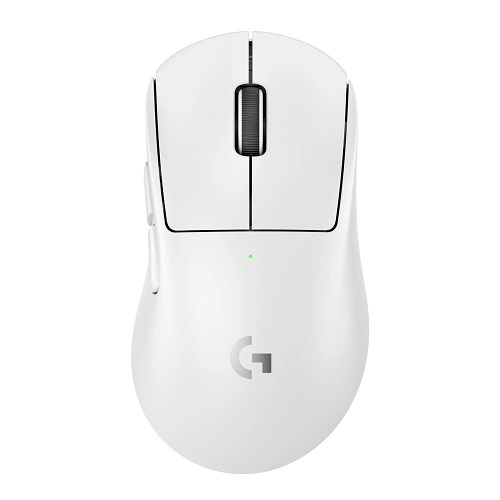 | Medium~Large Size / Ergo Shape / Wireless / Lightweight | Pros
Cons
| 4.3 |
DETAILED REVIEW // Brand: Logitech / Model: 910-007367 / Release Date: 9/17/2024 / Price: $149.95 The DEX is Logitech's new premium offering in the ergo/asymmetrical space, and depending on the day it can be pricier than the GPX 2. I personally use the DEX as my daily driver because I like the comfortability of asymmetrical mice, find them to provide great speed and control when flicking to targets, and adept at making micro adjustments in between shots. That being said, symmetrical offerings provide consistency in a range of different situations and I completely respect why they are a popular choice for many. Like the GPX 2, the DEX is a wireless mouse with great battery life (cable for charging and playing at the same time), a respectably low weight of 60g, and the same compatibility with Logitech's G Hub software, however, the DEX is asymmetrical and slightly larger. In terms of design, it strikes a balance between the GPX2 and the Razer Deathadder V4 Pro. Being an asymmetrical mouse, the back is slightly more flared out and the middle hump is more pronounced, making it suitable for medium and slightly larger palms. The button height is also slightly higher than the GPX 2 and more in line with the Deathadder. Great at dynamic aiming scenarios, the DEX brings some individuality to the table with its slightly narrower width, but may not excel as much as the GPX 2 and Deathadder at horizontal control and tracking. In terms of alternatives, the ASUS ROG Keris II Ace is cheaper than the DEX and is slightly shorter and a little wider (medium size), and if you are looking for something larger then consider the Razer Deathadder V4 Pro. In short, the Logitech G Pro X Superlight 2 DEX is an exciting new offering to the scene and I think it will become a great contender in the competitive space. It has the same quality and performance as the much hyped GPX 2 and has been met with a largely positive reception from the community. | |||
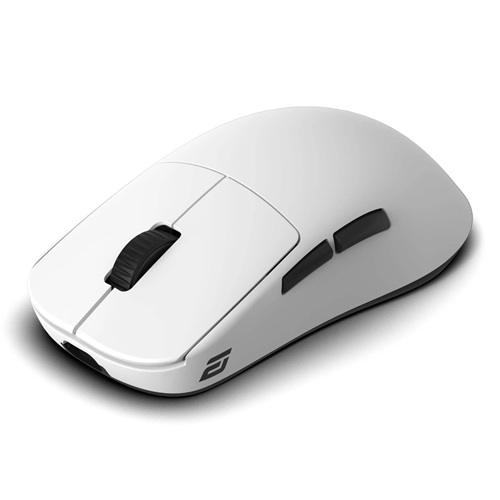 | Small Size / Symmetrical Shape / Wireless / Lightweight | Pros
Cons
| 4.3 |
DETAILED REVIEW // Brand: Endgame Gear / Model: EGG-OP1W-4K-V2-WH / Release Date: 8/8/2024 / Price: $129.99 Update: Here is a link for the OP1we (1000hz polling rate), as the OP1w may be hard to source. | |||
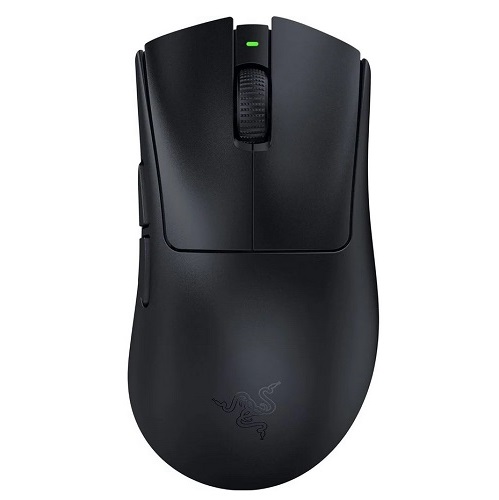 | Small Size / Ergo Shape / Wireless / Lightweight | Pros
Cons
| 4.4 |
DETAILED REVIEW // Brand: Razer / Model: RZ01-05140100 / Release Date: 6/20/2024 / Price: $75.00 This next Razer offering has been very well received amongst reviewers. The Deathadder V3 Hyperspeed is Razer's new endeavour to make a smaller version of the Deathadder V3 Pro. The DA Hyperspeed is a wireless, lightweight, medium~small sized ergo/asymmetrical mouse with great build quality, for the price. It's difficult to compare it to other asymmetrical offerings because of its unique size, but here's the breakdown; the DA Hyperspeed has a light weight of 55g (anything 60 or under is great), is narrower when compared to most medium~large sized mice, has a similar low~medium button height and middle hump to the Viper V3 Pro, and its back tapers off a bit in similar fashion to its Razer brothers - allowing for a little more play between the fingertips and palm. If you like the shape of the Deathadder and the sleekness of a Viper, but in a smaller package, then you shouldn't be disappointed. That said, the DA Hyperspeed won't have every most premium feature compared to its pricier brothers (will need to buy a hyperpolling dongle for polling rates above 1000hz), yet at its much cheaper price, it will still effectively handle everything important and achieve great results. Expectedly, the DA Hyperspeed also syncs with Razer's Synapse software, so it can be customized along with other Razer products, just like the Viper. Another positive feature of the DA Hyperspeed is that it has its own in-built rechargeable battery, something often not featured in Razer's other Hyperspeed variants. The Deathadder V3 Hyperspeed is Razer's latest champion and it has received near perfect reviews from various tech websites - with its unique form and great value, it's a fantastic choice if you want a premium asymmetrical mouse in a smaller package. | |||
Product
Notable Features
Medium Size / Symmetrical Shape / Wireless / Lightweight
Pros & Cons
- Common in pro play
- Proven design
- Great battery life
- Expensive
- Safe shape
Rating
Detailed Review
Update: The Logitech G Pro X2 Superstrike just released, for those wanting an even faster mouse with a steep price tag.
A premium mouse at a premium price point. One of the most popular mice in use by competitive gamers and esports professionals, and arguably the safest bet when it comes to choosing a mouse that is high quality with a proven design. The GPX 2 is a wireless mouse with great battery life (cable for charging and playing at the same time), has a respectably low weight of 60g, is a medium size, symmetrically shaped, and is suitable for most users if you're not looking for something ergo/asymmetrical. This mouse has an adequate back hump and a reasonably low button height, so those using claw grip can curve their fingers more for precise control. Medium and slightly larger palms should fit this mouse perfectly, however large palms would be better suited to the ASUS ROG Harpe Ace Aim Lab edition for the more pronounced back. If the GPX 2 is too pricey for you, then Endgame Gear's XM Series are a nice alternative. To configure the GPX 2, Logitech provides you with its G Hub software - the mouse profile can be set up using the onboard memory, so you don't need to keep running the software, however, G Hub can be utilised by other Logitech devices and allows for a range of customizability. The GPX 2 should provide a high level of speed and accuracy for most games and scenarios, perhaps its only detractor is that its design is very safe, but its proven shape should provide a lot of consistency in different aiming scenarios. In summary, Logitech's GPX 2 is popular, available, and has the potential to be the greatest mouse of all time. So if you're in the market for a premium mouse that is creating its own legacy of success, the GPX 2 is a great choice and worthy of high consideration.
Product
Notable Features
Medium Size / Symmetrical Shape / Wireless / Lightweight
Pros & Cons
- Competitive pedigree
- Great build quality
- Unique design
- Expensive
- Common
Rating
Detailed Review
Razer's Viper series has true pedigree, with its first edition being released in 2004, beginning its legacy well before its Logitech counterpart took its first steps. The Viper is another industry leader with a premium price point, but this time there is also a more affordable variant, the Viper Hyperspeed, which is somewhat heavier. This review will focus on the Viper V3 Pro. The Viper V3 Pro is a wireless mouse with great battery life (cable for charging and playing at the same time), it's lightweight, medium sized, symmetrical, has great build quality, and is the main competitor to Logitech's GPX 2. There are some similarities between these two contenders, but the key difference between them is the subtle weight variance, the shape of the back of the mouse, and that the Viper has grooved mouse buttons. The Viper V3 Pro is versatile, coming in at just 54g, 6g lighter than the GPX 2, and the back hump of the mouse is slightly less pronounced, allowing for a little more play between the fingertips and the palm. Sporting a reasonably low button height (same as the GPX2), the Viper allows for proper finger curvature in claw grip, enhancing control and precision. Medium sized and slightly smaller palms should find the Razer offering's size and shape to be a delight and provide great control. If you're interested in a cheaper alternative to the Viper, then the Fantech Helios II Pro S is very similar and great value. Like Logitech, Razer has its own proprietary software, called Synapse, which can be used to customize the mouse and other Razer devices in the same way as G Hub, and, also like Logitech, the Viper will also save your latest mouse configuration even if you aren't running the software. The Viper truly is a timeless mouse, and ever since it was refined into the V3 Pro, it has reinforced its position as a gaming behemoth. With scores of competitive victories, the Viper has proven it can easily match the hype of Logitech's GPX 2.
Product
Notable Features
Medium~Large Size / Ergo Shape / Wireless / Lightweight
Pros & Cons
- New ergo design
- Good build quality
- Great battery life
- Expensive
- Unproven
Rating
Detailed Review
The DEX is Logitech's new premium offering in the ergo/asymmetrical space, and depending on the day it can be pricier than the GPX 2. I personally use the DEX as my daily driver because I like the comfortability of asymmetrical mice, find them to provide great speed and control when flicking to targets, and adept at making micro adjustments in between shots. That being said, symmetrical offerings provide consistency in a range of different situations and I completely respect why they are a popular choice for many. Like the GPX 2, the DEX is a wireless mouse with great battery life (cable for charging and playing at the same time), a respectably low weight of 60g, and the same compatibility with Logitech's G Hub software, however, the DEX is asymmetrical and slightly larger. In terms of design, it strikes a balance between the GPX2 and the Razer Deathadder V4 Pro. Being an asymmetrical mouse, the back is slightly more flared out and the middle hump is more pronounced, making it suitable for medium and slightly larger palms. The button height is also slightly higher than the GPX 2 and more in line with the Deathadder. Great at dynamic aiming scenarios, the DEX brings some individuality to the table with its slightly narrower width, but may not excel as much as the GPX 2 and Deathadder at horizontal control and tracking. In terms of alternatives, the ASUS ROG Keris II Ace is cheaper than the DEX and is slightly shorter and a little wider (medium size), and if you are looking for something larger then consider the Razer Deathadder V4 Pro. In short, the Logitech G Pro X Superlight 2 DEX is an exciting new offering to the scene and I think it will become a great contender in the competitive space. It has the same quality and performance as the much hyped GPX 2 and has been met with a largely positive reception from the community.
Product
Notable Features
Small Size / Symmetrical Shape / Wireless / Lightweight
Pros & Cons
- More affordable
- Superior build quality
- YouTube aim enthusiast hype
- Too small for some
- Clicks too tactile?
Rating
Detailed Review
Update: Here is a link for the OP1we (1000hz polling rate), as the OP1w may be hard to source.
This next mouse is the Endgame Gear OP1w. Endgame are known for having great build quality and their mice tend to have less of a mark up than other premium brands. It's a small mouse, which won't suit everyone, but a lot of aim enthusiasts love small mice, and Endgame provides a lot of options with the OP series. It's important that buyers have access to cheaper wired versions of mice like the OP1 and OP1 8k, and cheaper wireless versions like the OP1we. For the sake of practicality, I'll be recommending the OP1w, which has a 4000hz polling rate and is a little more expensive than the OP1we variant. The OP1w is a small, wireless, lightweight, symmetrical mouse with great build quality and is suitable for those that want the versatility that a smaller mouse provides. In comparison to its pricier competitors, the Pulsar X2H v3 Mini and ASUS ROG Harpe Ace Mini, each mouse basically has an identical side and back profile, but the OP1we has a narrower grip width than both alternatives, which are both fantastic choices. This mouse has a light weight of 58.5g, which should provide an appropriate amount of versatility for gaming, given its size. Additionally, the OP series have been highly recommended by a lot of reviewers and are a favorite amongst many aim enthusiasts on YouTube. Endgame Gear have been gaining some traction in the market over recent years as buyers realise they make some high quality products that are great value, which is nice to see. They may not be as big as the big boys but they are making waves in the mouse scene, and it's no wonder why when they have quality options like the OP and XM series.
Product
Notable Features
Small Size / Ergo Shape / Wireless / Lightweight
Pros & Cons
- Proven competitive shape
- Unique small-ergo
- Affordable
- Have to buy dongle for higher hz
- Lacks some premium features
Rating
Detailed Review
This next Razer offering has been very well received amongst reviewers. The Deathadder V3 Hyperspeed is Razer's new endeavour to make a smaller version of the Deathadder V3 Pro. The DA Hyperspeed is a wireless, lightweight, medium~small sized ergo/asymmetrical mouse with great build quality, for the price. It's difficult to compare it to other asymmetrical offerings because of its unique size, but here's the breakdown; the DA Hyperspeed has a light weight of 55g (anything 60 or under is great), is narrower when compared to most medium~large sized mice, has a similar low~medium button height and middle hump to the Viper V3 Pro, and its back tapers off a bit in similar fashion to its Razer brothers - allowing for a little more play between the fingertips and palm. If you like the shape of the Deathadder and the sleekness of a Viper, but in a smaller package, then you shouldn't be disappointed. That said, the DA Hyperspeed won't have every most premium feature compared to its pricier brothers (will need to buy a hyperpolling dongle for polling rates above 1000hz), yet at its much cheaper price, it will still effectively handle everything important and achieve great results. Expectedly, the DA Hyperspeed also syncs with Razer's Synapse software, so it can be customized along with other Razer products, just like the Viper. Another positive feature of the DA Hyperspeed is that it has its own in-built rechargeable battery, something often not featured in Razer's other Hyperspeed variants. The Deathadder V3 Hyperspeed is Razer's latest champion and it has received near perfect reviews from various tech websites - with its unique form and great value, it's a fantastic choice if you want a premium asymmetrical mouse in a smaller package.
Honorable Mentions
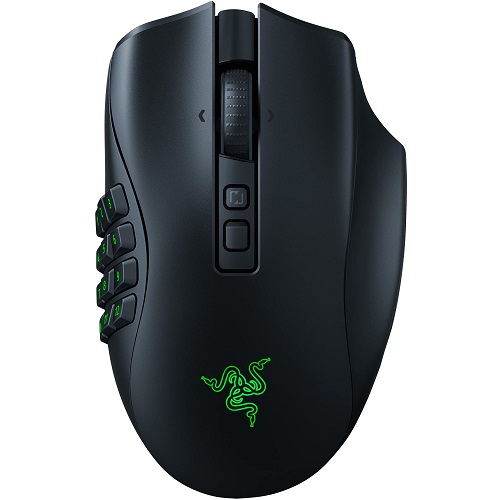
Razer Naga V2 Pro
Razer
$171.99
Notable Feature:
Medium Size, Ergo, Side Buttons
MMO focus
Heavy